You think this is going to be me telling you how I've quit editing my novel again, because it's complete and utter shit. But it isn't [about that]! Novel editing continues apace, I'm about three quarters of the way through. I think I'll have increased the word count by about 25% in the process. Not sure how that happened...
ANYWAY, no, this is not about that, exactly, but it is about the virtue of quitting. I was listening to this Freakonomics podcast, about quitting and it struck a chord, largely because it was saying that quitting is a Good Thing. Admittedly, they meant like if you're in a bad job, or you're a prostitute, or something, but it works with all walks of life, including in literature.
Hope Clark wrote a little blog post about quitting books, recently, where she says that when she's reading, she'll give a book 75 pages to interest her and if it doesn't, she'll stop. That's what I do! Though I will, generously, give it 100 pages. If it doesn't entertain me, or at least make me feel things, I get rid of it, and still, crucially, feel entitled to have an opinion on it.
I know a lot of people who will not abandon a book. It might mean that they barely read anymore, or they don't enjoy reading anymore, but they will finish that book, and they get a bit upset when you say you didn't like something so you stopped reading it. There are, sometimes, insinuations... but whatever; in the time it took them to read that book, I read three others, and they were great.
This works with writing too, obviously. If an idea is not working, you should probably just give it up, and move on to something else. Maybe the idea just wasn't very good in the first place, or maybe it will be good one day, but not right now, with where you are as a writer/human being. It doesn't make you a bad person. There are loads of other things you can do!
And that is the crux-a-mundo. When you're reading a book you don't enjoy, you read much less than normal. If you're writing something that is not working, and is painful to write, you'll be writing less often that you usually do. Which is not a good thing. To keep it interesting (if not necessarily fun), you really do need to know when to cut your losses, however painful it might feel.
I'm assuming here that you're a slightly obsessive type of person who finds it hard to quit things, or to leave food on your plate. Waste is bad, I agree, but giving something up is not waste. We only have so much time to play with, and you waste it when you don't enjoy your leisure time.
Showing posts with label Writing Novels and Things. Show all posts
Showing posts with label Writing Novels and Things. Show all posts
Thursday, 13 October 2011


Tuesday, 4 October 2011
Writing Novels and Things #13: Making Deadlines
Before I start this post, I just want to say that everything I said in my last post is still true: I have begun editing my first novel (again). In the first paragraph I saw, which I had apparently already edited, I found about eighty mistakes. It was excellent. Still, I am persevering on account of how it is good for me, and things.
HOWEVER, I have also decided that I am going to write another novel. And this novel will be written in November, or 50,000 words of it, and I will be doing it with others. That's right, I'm doing NaNoWriMo again! I said I wouldn't but I will. And the reason that I am doing it again is, mostly, because it makes me write, and the reason it makes me write is because it gives me, to all intents and purposes, a daily deadline.
 Writers are, I imagine, like most people, and like to procrastinate. I like to procrastinate a lot. When I'm not procrastinating, I imagine that I like getting things done, but in those times I am completely deluding myself. I like not getting things done, if they don't need doing quite yet. I love writing, but I also like, well, lots of other things and some of these things are a bit easier than writing, so sometimes I do those things instead. Things like watching Hollyoaks and making hummus and eating hummus, things like that.
But when I have a deadline, and certainly one that is imminent, I work hard, like a normal person who likes working hard. When I was doing my CW masters, I read all the books and wrote loads in and out of the classes, because the deadlines were weekly, and I had to do all that work to be good for the next lesson. I barely went out for two years, outside of term-time, and I felt very pleased with myself.
 NaNoWriMo is a bit like doing a masters, except it's about 1/24th the duration and involves far less reading and much more writing. When I did it last year, I very rarely felt stressed by the experience, I was just happy. It's satisfying, being able to tick off your word counts every day, you see, and, also, writing all the time is a bloody pleasure. You get to make things up and then make them real! It's pretty sweet.
This year, I have only vague ideas about the novel I want to write. I know I want it to be an comic adult fantasy novel (and by 'adult', I don't mean sexy, I just mean not 'young adult'), and I have some notion of characters and setting, but nothing very concrete. Which is fine! The best part of NaNoWriMo for me last year was watching my own story unfold and evolve before me. I barely even knew what was going to happen then (which would be obvious if you'd seen the first draft - which you will not!).
When I get round to writing my proper literary novel, I will be planning intensely, and crafting as I go, and the writing will take me a lot longer than a month. I don't know if NaNoWriMo (incidentally, the most irritating word to type in all existence) produces good-quality literature, possibly not, but for me it has been so useful in showing me that I can write a book, even if writing a good book is still somewhat beyond me.
This time, I am going to let the lesson stay learned. I am going to give myself a daily deadline for writing (say, 300 words) and I am going to stick to it come hell or high water. Definitely.
Also, this now gives me a deadline less than a month to finish editing my last book. Please do nag me about this.
HOWEVER, I have also decided that I am going to write another novel. And this novel will be written in November, or 50,000 words of it, and I will be doing it with others. That's right, I'm doing NaNoWriMo again! I said I wouldn't but I will. And the reason that I am doing it again is, mostly, because it makes me write, and the reason it makes me write is because it gives me, to all intents and purposes, a daily deadline.
Writers are, I imagine, like most people, and like to procrastinate. I like to procrastinate a lot. When I'm not procrastinating, I imagine that I like getting things done, but in those times I am completely deluding myself. I like not getting things done, if they don't need doing quite yet. I love writing, but I also like, well, lots of other things and some of these things are a bit easier than writing, so sometimes I do those things instead. Things like watching Hollyoaks and making hummus and eating hummus, things like that.But when I have a deadline, and certainly one that is imminent, I work hard, like a normal person who likes working hard. When I was doing my CW masters, I read all the books and wrote loads in and out of the classes, because the deadlines were weekly, and I had to do all that work to be good for the next lesson. I barely went out for two years, outside of term-time, and I felt very pleased with myself.
 NaNoWriMo is a bit like doing a masters, except it's about 1/24th the duration and involves far less reading and much more writing. When I did it last year, I very rarely felt stressed by the experience, I was just happy. It's satisfying, being able to tick off your word counts every day, you see, and, also, writing all the time is a bloody pleasure. You get to make things up and then make them real! It's pretty sweet.
This year, I have only vague ideas about the novel I want to write. I know I want it to be an comic adult fantasy novel (and by 'adult', I don't mean sexy, I just mean not 'young adult'), and I have some notion of characters and setting, but nothing very concrete. Which is fine! The best part of NaNoWriMo for me last year was watching my own story unfold and evolve before me. I barely even knew what was going to happen then (which would be obvious if you'd seen the first draft - which you will not!).
When I get round to writing my proper literary novel, I will be planning intensely, and crafting as I go, and the writing will take me a lot longer than a month. I don't know if NaNoWriMo (incidentally, the most irritating word to type in all existence) produces good-quality literature, possibly not, but for me it has been so useful in showing me that I can write a book, even if writing a good book is still somewhat beyond me.
This time, I am going to let the lesson stay learned. I am going to give myself a daily deadline for writing (say, 300 words) and I am going to stick to it come hell or high water. Definitely.
Also, this now gives me a deadline less than a month to finish editing my last book. Please do nag me about this.
Saturday, 1 October 2011
Writing Novels and Things #12: The Fear
 You know how, sometimes, you get yourself into a routine, like going to the gym every morning, say. You feel virtuous, and healthy, and then you get a bit pious. Friends will find you harping on about how much better you feel ever since you started going to the gym before work, and you've lost weight, and you're a better lover, and it's actually kind of easy, and your friends will pretend to care, because they're nice (probably) and, anyway, they do the same with kids and sports and the television and things.
AND THEN, you get sick, or you go away for work, or you get drunk and can't get out of bed, and the habit slips for that day. And then the next day, it's kind of hard to get out of bed, when you don't absolutely have to, so you don't go to the gym that morning. And the next day it's the same, so you say, 'OK, the routine starts back again on Monday,' so that's fine. But then it doesn't! Because you have The Fear! And then you get fat and die.
So let's do away with the charade and admit that this has all been a metaphor, and I'm actually talking about writing. The gym is writing, the weight loss is probably weight gain, but your friends are still your friends, I'd imagine. The Fear, as always, is The Fear.
Well, when I started writing my novel, I didn't give myself time to give in to The Fear. I wrote it in a month, at break-neck speed, and I was in the beginning stage of loving smugness right up until the final page.
Afterwards, I left it for six months before I started editing, which I began with the same kind of vigour and self-love. The thing about editing though, is that it takes a long time and that it forces you to engage your brain. This time and brain engagement leads to thinking, something that can be quite destructive when applied to a writer's sensitive disposition, and can end in creative meltdowns.
I had one, a little one, about halfway through editing the novel. It wasn't so much that I was upset, just resigned and tired. I felt like I was wasting my time, because it was rubbish, and it wasn't even fun anymore. So I walked away from it, to rejuvenate for a bit, and now, a few months on, I want to start it again but I'm afraaaaaid!
I'm not really sure how to tackle The Fear. Eventually, you just go and do it, don't you? If you're serious about wanting to do it. This week, I've just had the feeling that now is the time that I have to start, or I never will. And i'd be pretty annoyed with myself about it. It was OK for me to be made weary by the book, and I think it was the right decision to walk away at the time, so that I made sure to do the best job that I could on its editing, but it is time now. It's time.
Rhys
PS. I totally started back at the gym this week!
PPS. I have a little piece about libraries up at Paraxis (with my first ever published 'art'), feel free to read it.

Thursday, 22 September 2011
Writing Novels and Things #11: Talking on paper
I am reading a book about writing. I am not going to mention its name because I don't think it's very good (the writer keeps quoting his own works of fiction to illustrate his point and they really do not inspire me, if you know what I mean). However, he does quote some good people and the chapters on dialogue got me actually thinking about dialogue.
Usually, I don't really think about dialogue, largely because I think I'm better at it than other aspects of writing, so I don't work very hard on it. But these chapters made me THINK. I think I'm going to have to go through my novel once more, looking exclusively at the dialogue, and rewriting it all. (Sigh.)
Anyway, in my attempts to discover how best to write good dialogue, I have done some research and found some good hard and fast rules to stick to when writing the words that people say in your mind.
Only half of your words should be dialogue
I hadn't heard this one before but it does make sense. Essentially, the dialogue to action/thoughts ratio should be no more than 1:1, but preferably lower. I guess if you want it to be higher, you may want to start thinking about writing a script...
 As with all of my excellent rules, there are exceptions. Frankenstein, for example, is technically all dialogue, and I think Trouble With Lichen is about 90% dialogue. But those novels have a storytelling premise, so it is OK. If you're trying to write a reasonably conventional story, then don't let your dialogue take up more than 50%.
Only let one thing happen per paragraph
We all know that when someone stops speaking, and another person starts speaking, we start a new paragraph. However, what I didn't know, but now see in every bit of dialogue I read, is that only one new idea should appear in a paragraph.
So instead of:
'Hi! How are you? What's going on with your hair? Do you think Davey murdered my Granny?'
'Hello! [Answers to the three questions]'
You would have six separate paragraphs where the first person asks one question in each, and the answerer responds to them one by one. It makes things much clearer and advances the plot much more effectively.
Dialogue must always advance the plot
When that one thing is happening per paragraph, something else must be happening. Without everything becoming completely expository, some information must be released to the reader with every line. This doesn't have to be the story, I don't think, it can be character points, but it has to have a purpose.
This holds true of all the words in your fiction, but I think it's worth taking extra care with dialogue. It's very easy to get sidetracked and blown off course when your characters are taking through you. They start having actual conversations like real people. This does not read well.
If you use dialogue tags other than 'say' or 'ask', you are a bad person (or Enid Blyton)

'Goodness me,' exclaimed Judy, 'there's a crab in my bucket!'
'Calm down,' reassured Clive, 'it's a dead crab, the crab in your bucket.'
'But as a child, my beloved hamster Muffy was killed by a crab,' exposited Judy.
'You're a ridiculous person,' grumbled Clive.
Even though it is quite fun to write like that, adding anything other than 'said' or 'asked' does sound a little parodic. According to Elmore Leonard, it also draws too much attention to the writer, and detracts from the story.
It also doesn't work if you add an adverb to the word 'said'; that's just the same thing. So, using the above example:
Judy said, exclaimingly.
Clive said, reassuringly.
Judy said, expositorily.
Clive said, grumblingly.
I realise that these sound wrong largely because those adverbs are mostly of my invention, but even if you might want to use real words, a 'said'-aligned adverb something you should avoid. Trust that the character's actions and the actual dialogue can convey the tone.
And these are the only four definites that I will give you, the rest is about you and yoru characters and how they want to say things. There are layout concerns, obviously, but those can easily be dealt with when you've done the writing.
Usually, I don't really think about dialogue, largely because I think I'm better at it than other aspects of writing, so I don't work very hard on it. But these chapters made me THINK. I think I'm going to have to go through my novel once more, looking exclusively at the dialogue, and rewriting it all. (Sigh.)
Anyway, in my attempts to discover how best to write good dialogue, I have done some research and found some good hard and fast rules to stick to when writing the words that people say in your mind.
Only half of your words should be dialogue
I hadn't heard this one before but it does make sense. Essentially, the dialogue to action/thoughts ratio should be no more than 1:1, but preferably lower. I guess if you want it to be higher, you may want to start thinking about writing a script...
Only let one thing happen per paragraph
We all know that when someone stops speaking, and another person starts speaking, we start a new paragraph. However, what I didn't know, but now see in every bit of dialogue I read, is that only one new idea should appear in a paragraph.
So instead of:
'Hi! How are you? What's going on with your hair? Do you think Davey murdered my Granny?'
'Hello! [Answers to the three questions]'
You would have six separate paragraphs where the first person asks one question in each, and the answerer responds to them one by one. It makes things much clearer and advances the plot much more effectively.
Dialogue must always advance the plot
When that one thing is happening per paragraph, something else must be happening. Without everything becoming completely expository, some information must be released to the reader with every line. This doesn't have to be the story, I don't think, it can be character points, but it has to have a purpose.
This holds true of all the words in your fiction, but I think it's worth taking extra care with dialogue. It's very easy to get sidetracked and blown off course when your characters are taking through you. They start having actual conversations like real people. This does not read well.
If you use dialogue tags other than 'say' or 'ask', you are a bad person (or Enid Blyton)

'Goodness me,' exclaimed Judy, 'there's a crab in my bucket!'
'Calm down,' reassured Clive, 'it's a dead crab, the crab in your bucket.'
'But as a child, my beloved hamster Muffy was killed by a crab,' exposited Judy.
'You're a ridiculous person,' grumbled Clive.
Even though it is quite fun to write like that, adding anything other than 'said' or 'asked' does sound a little parodic. According to Elmore Leonard, it also draws too much attention to the writer, and detracts from the story.
It also doesn't work if you add an adverb to the word 'said'; that's just the same thing. So, using the above example:
Judy said, exclaimingly.
Clive said, reassuringly.
Judy said, expositorily.
Clive said, grumblingly.
I realise that these sound wrong largely because those adverbs are mostly of my invention, but even if you might want to use real words, a 'said'-aligned adverb something you should avoid. Trust that the character's actions and the actual dialogue can convey the tone.
And these are the only four definites that I will give you, the rest is about you and yoru characters and how they want to say things. There are layout concerns, obviously, but those can easily be dealt with when you've done the writing.
Monday, 19 September 2011
Writing Novels and Things #11: Taking inspiration
 There are certain things about writing that I find relatively easy, that others find difficult, stuff like starting projects, finding a voice, sending my stuff off to be rejected, sitting down and doing writing, stuff like that. Then there are the things that others seem to have a surfeit of, that are seemingly essential to the creative process, that I lack. One of these things is ideas.
(I am quelling the desire to justify this, so that you don't think I have nothing to say and/or shouldn't be working in a creative field. Have I also just given too much away, admitting as I have that I care what you think? As this paragraph is bracketed, I would prefer if you never mentioned having read this. Thanks!)
If I sit there at my computer and think, 'OK, let's find something for my characters to do,' I will freeze, entirely. My characters will do nothing. They'll sit around an office, or a coffee shop, or a living room, wittily, insightfully, charmingly, gazing into their navels and remarking on the world around them (and this world will, probably, be quite a lot like mine). This kind of fiction is rarely of interest to people who read things. Honestly.
So, I have learned that, for me, I must come to the empty Word document with a hook or concept, lest I write yet another moody coming-of-age tale where nothing happens (which I love, by the way, and will never stop writing). You come up with these concepts by having things called ideas. These can be found all around, and when you get these ideas from around you, it is said that you are drawing inspiration.
 Mur Lafferty wrote a good little blog post about ideas and generating them. Essentially, ideas are like a magic penny, hold it tight and you wont have any, but spend it, lend it, and you'll have so many that they'll roll all over the floor. Yes, I just stole those lyrics from a song about God, but I think it works in this regard too. Basically, you're supposed to use all your ideas all the time, and don't save them up for later. You'll think of new ones. Getting the old ones out of your head and onto the page will actually clear room for new ones. This is, I think, Science.
So, in summary, in order to be a good fiction writer, you need ideas. You may well have known that already. The good thing is, prompts for ideas are all around us because we live in a world where there are so many things! One of the first assignments in my masters course was to find a picture and write a story about it. I can't find the original picture, but I'm fairly sure that it was a Studio Ghibli film still with a little girl looking at her reflection in the river. So I wrote a terrible (not in terms of subject matter, in terms of quality) story about that!
It's a good exercise, because it teaches you not to be too precious about your subject matter, and to look deeply into everything around you. If you can create a story sparked by just one little picture, what can you do with a whole world at your disposal?! Write more stories, mostly.

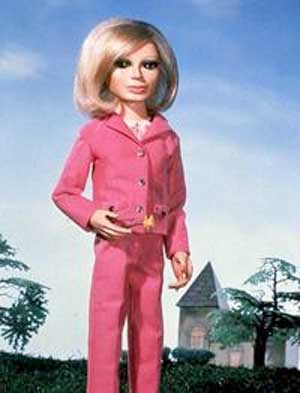
Music is good for that. Just this week, I was very inspired by an Elbow song. I haven't yet turned it in to anything, but it made me want to write a poem for the first time in ages. I then realised, while trying to write the poem, that I had no idea how to write a poem and that copying song lyrics is not the way. However, the first short story I ever got published was based on a song by Air, called Le Voyage De Penelope. It wasn't so much the song as the title; and it was a very literal interpretation. If I tell you that the title of the story ended up being Le Voyage De Lady Penelope, I think you'll get a good idea of where I went with it. I still quite like that story though, which I almost never say, modest bastard that I am.
It doesn't always work. I was fascinated by the painting below for about ten years, I even made a sculpture of it, from wire and black feathers, and have, in my head, turned her into a superhero, but I have never been able to write something about her that isn't, well, a bit rubbish.
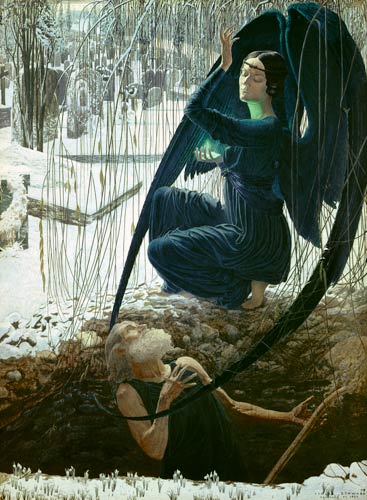
See also: the above Elbow anecdote. they can't all be winners!
Still, this is my advice to all those struggling for ideas:
Wednesday, 7 September 2011
Writing Novels and Things #10: Write what you (don't) know
I've been meaning to write about this for ever, and I think I wrote it down in a notebook somewhere (writing tip: be organised with your notebooks - it's all very good writing things down, it's excellent, but it is only an effective planning/idea-generating exercise if you can find the notebook when it comes time to do some writing), but I lost it and had to write about short stories and stuff instead. (Another writing tip: try to avoid overly long parentheses - well the sentences between the parentheses - as these can derail the flow, and more importantly the meaning, of your sentences.)
The reason I've been wanting to write about this for ever is because the old adage.. ,
'You should write what you know,'
... is one of the pieces of advice that people love to bandy around about writing. It would be a commandment, if Creative Writing were a religion. Creative Writing is not a religion. Anyway, yes, it's a little bit of a universal truth. But is it universally true?
Not really.
I remember reading an interview with Phillip Pullman (I honestly am not in love with him or anything), where the interviewer asks him how on earth he, an old man, could get into the head of Lyra, who is, in fact, not an old man. He says this:
Anyway, yes, he says is perfectly. If people genuinely wrote what they knew - their lives - and this was what publishers wanted, there would be millions of books all about boring office jobs and watching X-Factor. There be some of those, but not many.
The job of a writer is to make everything mean something. Conversations in real life rarely go anywhere, they're just to fill time or for entertainment's sake. They don't help move forward the plot of our lives, and they are filled with stutterings and affectations and repetition and stutterings and affectations... Ha! And the same goes for our actions. We make dinner and it doesn't affect our relationships. We brush our teeth and go toilet and call our mums and it doesn't mean anything.
In One of Our Thursdays is Missing by Jasper Fforde, a fictional character comes into the real world and is completely confused. So many things happen, and she can't tell if any of them are salient to the plot or if they just, you know, happen. It's impossible for her to solve the case she's working on because there are so many clues that could be meaningless. And time passes so slowly; if she wants to wait for something that's happening in an hour, she has to sit through that whole hour. In the fictional world, it take three words: 'An hour later...'
What that book, and Phillip and I am trying to say is this: fiction is not real life and real life is not fiction. And that is OK.
I'm taking quite a literally approach to the 'write what you know' maxim when I say it's rubbish. In essence there are, in fact, good things to take from it. As Phillip says, we 'take the things we know and play with them,' in fiction. You may know how feelings work, or certain professions, or certain sciences and fantasies, in the real world, but really these should just be tools that you use in forming your fiction. Like... knowing how to spell? Stuff like that. You don't, when you write fiction, write down a long list of the words that you know how to spell. That's not fiction, and neither is a blow-by-blow account of the daily minutiae of your life. Not that you were going to write that either...
And thus we get to my point. When we start writing fiction, we should start with our imaginations. We create a story. From there, everything else hangs: character, dialogue, voice, our real-life experience, word-play, sentence construction, and so on. Your reader will thank you and, I can guarantee, be much more interested in the things that you know.
(Big thanks to the articles below for reminding me that I wanted to write about this (and also for their contents, which I slightly stole).)
Writer Unboxed
The Atlantic
The reason I've been wanting to write about this for ever is because the old adage.. ,
'You should write what you know,'
... is one of the pieces of advice that people love to bandy around about writing. It would be a commandment, if Creative Writing were a religion. Creative Writing is not a religion. Anyway, yes, it's a little bit of a universal truth. But is it universally true?
Not really.
I remember reading an interview with Phillip Pullman (I honestly am not in love with him or anything), where the interviewer asks him how on earth he, an old man, could get into the head of Lyra, who is, in fact, not an old man. He says this:
People often forget that there's such a thing as imagination. What imagination does is to take the things we know and play with them so they're not always recognisable.And then he says this:
Some people would say "Always write about what you know". I don't think that's good advice at all. Nor is the advice to write what you think people will like. I think that's just silly. We shouldn't bother about other people at all when we write. It's none of their business what we write.He's an opinionated man.
Anyway, yes, he says is perfectly. If people genuinely wrote what they knew - their lives - and this was what publishers wanted, there would be millions of books all about boring office jobs and watching X-Factor. There be some of those, but not many.
The job of a writer is to make everything mean something. Conversations in real life rarely go anywhere, they're just to fill time or for entertainment's sake. They don't help move forward the plot of our lives, and they are filled with stutterings and affectations and repetition and stutterings and affectations... Ha! And the same goes for our actions. We make dinner and it doesn't affect our relationships. We brush our teeth and go toilet and call our mums and it doesn't mean anything.
In One of Our Thursdays is Missing by Jasper Fforde, a fictional character comes into the real world and is completely confused. So many things happen, and she can't tell if any of them are salient to the plot or if they just, you know, happen. It's impossible for her to solve the case she's working on because there are so many clues that could be meaningless. And time passes so slowly; if she wants to wait for something that's happening in an hour, she has to sit through that whole hour. In the fictional world, it take three words: 'An hour later...'
What that book, and Phillip and I am trying to say is this: fiction is not real life and real life is not fiction. And that is OK.
I'm taking quite a literally approach to the 'write what you know' maxim when I say it's rubbish. In essence there are, in fact, good things to take from it. As Phillip says, we 'take the things we know and play with them,' in fiction. You may know how feelings work, or certain professions, or certain sciences and fantasies, in the real world, but really these should just be tools that you use in forming your fiction. Like... knowing how to spell? Stuff like that. You don't, when you write fiction, write down a long list of the words that you know how to spell. That's not fiction, and neither is a blow-by-blow account of the daily minutiae of your life. Not that you were going to write that either...
And thus we get to my point. When we start writing fiction, we should start with our imaginations. We create a story. From there, everything else hangs: character, dialogue, voice, our real-life experience, word-play, sentence construction, and so on. Your reader will thank you and, I can guarantee, be much more interested in the things that you know.
(Big thanks to the articles below for reminding me that I wanted to write about this (and also for their contents, which I slightly stole).)
Writer Unboxed
The Atlantic
Tuesday, 23 August 2011
Writing Novels and Things #9: Short stories, Part 2
So my last post may have been all about how pointless it is to write short stories, but this post is all about how to write short stories! I am breaking you down in order to build you up. Using a combination of my own experience, my creative writing history and the internet, I have compiled a list of five rules that you should always obey when writing short stories. They are, I am happy to say, quite prescriptive.
The rules are in no particular order, so I haven't numbered them. Please do let me know if bullet points aren't enough and you would prefer them in numerical order of importance. Onwards!
Try not to feature too many characters
[The last short story I wrote had three main characters and two prominent supporting characters. I wanted it to be a novel, really, which is why it will probably never see the light of day as a short story.]
You don't need to resolve everything
[I can think of a number of strong examples that disprove this rule, but I don't think any of them would have been harmed by following it. So... I stand by it.]
Know what your characters want (at the very least)
[In the first short story I had published, I knew nothing of this but subconsciously, I had a very clear idea of the main character's motivations, so it worked. It does not always work, believe me. Eventually, it will become automatic, but until then it's something you should force yourself to remember.]
Tell a story
 Which is my way of saying that you should structure your story like it's a story (see handy diagram). This is called the Five Act Structure and was invented by some guy called Freytag. It's a perfectly good structure to follow and, to all intents and purposes, still allows for an infinite number of story possibilities. However, in a short story, the Exposition bit should be super short, if non-existent, because you don't have time to waste. You should, really, begin at the point of Rising Action, though sometimes a little scene setting is required, so I will be lenient and say that you don't have to if you don't want to (but you should). There is also the Three Act Structure, which was invented by Aristotle and is comprised of the Setup, the Confrontation and the Resolution. Everything I said above still holds, but with two fewer acts.
[I find structure the hardest bit about writing but this is likely because it is probably the most important aspect of story telling. You should always be thinking about it, even if it's not a predefined one like I've given above, you can't just put the words down in any old order. Unless you're writing a blog. Self-zing!]
Try to get it published
You might as well. You also may as well try to get it published by the most well-respected, high-profile publisher of the kind of short stories that you write. If it's literary, for example, just send it to Granta Magazine. You never know! And then when you have experienced rejection (which will lead to most excellent personal growth), try other publishers who are more willing to take a punt on a newcomer. It's best to go for the ones that pay, but not vital (or even possible, depending on what kind of story you are writing), and I think the joy of getting published will doubtless override... um... poverty.
[Please see previous post for depressing news about writing short stories.]
The rules are in no particular order, so I haven't numbered them. Please do let me know if bullet points aren't enough and you would prefer them in numerical order of importance. Onwards!
Try not to feature too many characters
[The last short story I wrote had three main characters and two prominent supporting characters. I wanted it to be a novel, really, which is why it will probably never see the light of day as a short story.]
You don't need to resolve everything
[I can think of a number of strong examples that disprove this rule, but I don't think any of them would have been harmed by following it. So... I stand by it.]
Know what your characters want (at the very least)
[In the first short story I had published, I knew nothing of this but subconsciously, I had a very clear idea of the main character's motivations, so it worked. It does not always work, believe me. Eventually, it will become automatic, but until then it's something you should force yourself to remember.]
Tell a story
 Which is my way of saying that you should structure your story like it's a story (see handy diagram). This is called the Five Act Structure and was invented by some guy called Freytag. It's a perfectly good structure to follow and, to all intents and purposes, still allows for an infinite number of story possibilities. However, in a short story, the Exposition bit should be super short, if non-existent, because you don't have time to waste. You should, really, begin at the point of Rising Action, though sometimes a little scene setting is required, so I will be lenient and say that you don't have to if you don't want to (but you should). There is also the Three Act Structure, which was invented by Aristotle and is comprised of the Setup, the Confrontation and the Resolution. Everything I said above still holds, but with two fewer acts.
[I find structure the hardest bit about writing but this is likely because it is probably the most important aspect of story telling. You should always be thinking about it, even if it's not a predefined one like I've given above, you can't just put the words down in any old order. Unless you're writing a blog. Self-zing!]
Try to get it published
You might as well. You also may as well try to get it published by the most well-respected, high-profile publisher of the kind of short stories that you write. If it's literary, for example, just send it to Granta Magazine. You never know! And then when you have experienced rejection (which will lead to most excellent personal growth), try other publishers who are more willing to take a punt on a newcomer. It's best to go for the ones that pay, but not vital (or even possible, depending on what kind of story you are writing), and I think the joy of getting published will doubtless override... um... poverty.
[Please see previous post for depressing news about writing short stories.]
Thursday, 18 August 2011
Writing Novels and Things #8: Short Stories (Part 1)
Me and my novel have parted ways, for a while. It's a trial separation, at least that's what we're saying right now; we have every intention of getting back together some day and making it work. We just need some time apart, some distance, so we can learn to appreciate each other some more. It'll be better, eventually, when we reunite, whenever that is.
I don't even miss it.
But I do miss the writing, so I have been doing the odd bit of non-novel, non-blog writing in the meantime. I have a little piece (and possibly some artwork) coming out in the next issue of Paraxis, about my love of libraries. I have had a super-short story published today at Paragraph Planet (if you want to find it after today, go to the archive and search for today's date). And it's kind of, technically, Science Fiction, so that's a first. Also, I have finished my first proper short story since my masters, and it feels good. It is currently being read my oldest friend (and most adoring reader) Leila, before I consider what else to do with it.
The question is though... what do you do with it? I was looking at a short story journal's submissions page recently and they said something along the lines of:
'If a fifth of the people who submitted to our magazine, actually bought one, we'd be rich.'
Sadly, I totally believe that. Newspapers may do one short fiction supplement annually, few magazines feature them (maybe some of the women's weeklies), there are no mainstream magazines or journals devoted to them and even Radio 4 is trying to cut back on their short story output (or is it?). Weirdly, in our crazy bite-size-loving world, the popularity of short stories is still on the downturn.
 I have to confess, my Granta magazine subscription aside, I have read only one short story collection this year, and none by a specific author. I love Raymond Carver, obviously, but, well, reading a whole book of his short stories is so much harder than just reading a novel! There are so many endings, and so many characters to invest in from scratch, and then there's more endings and all these new characters and just when they're starting to mean something to you... it ends! Basically, you just can't immerse yourself in a short story the way you can with a novel.

I think, though I may be wrong, that it would be almost impossible to make a living as a short story writer. The only person I can think who might have a chance is Tobias Wolff, though they are undoubtedly a few others. [The only book of his I've read, I have to confess, is his novel Old School - though it is about short stories, at least.] It's exceptionally difficult to get publish (relative to, say, a feature article), and almost nobody will read it. And yet every writer, and especially a new one, wants to write them!
 They're shorter, I suppose, than a novel, so that's easier. You won't get bored. If it's rubbish, there's less shame in giving up and walking away. If you make mistakes, there won't be too many people that notice. And who cares, anyway, because you'll be on to the next one by the time anyone says anything. Writing a novel is a huge commitment, writing a short story is, like, whatever. You know?
Well, in theory. For me, writing and editing a short story is every bit as difficult and painful as my novel has been. Except it's worse, because you don't have 80,000 words to get someone invested, you need to keep them riveted with each word. With a short story, by necessity, you have to rip apart and rewrite every sentence until it is perfect and exists solely to serve the story. If you're anything like me, you will start out thinking this is a fun, worthwhile experience that will result in your own personal growth. Moments later, you hate yourself, your loved ones and the fact that language was ever invented.
[If this doesn't happen to you, and you like the editing phase, I don't think we could be friends.]
The point of this post was to lay out my ideas, and findings, about how to approach writing a short story, but have slightly detoured. In summary though, people who write short stories do not have it easy. Writing a good short story is extremely difficult and I'm not entirely sure I ever will. So I am in awe of those who do, and I am going to make more of an effort to actually read them.
So... you know what that means? Two-parter!
I don't even miss it.
But I do miss the writing, so I have been doing the odd bit of non-novel, non-blog writing in the meantime. I have a little piece (and possibly some artwork) coming out in the next issue of Paraxis, about my love of libraries. I have had a super-short story published today at Paragraph Planet (if you want to find it after today, go to the archive and search for today's date). And it's kind of, technically, Science Fiction, so that's a first. Also, I have finished my first proper short story since my masters, and it feels good. It is currently being read my oldest friend (and most adoring reader) Leila, before I consider what else to do with it.
The question is though... what do you do with it? I was looking at a short story journal's submissions page recently and they said something along the lines of:
'If a fifth of the people who submitted to our magazine, actually bought one, we'd be rich.'
Sadly, I totally believe that. Newspapers may do one short fiction supplement annually, few magazines feature them (maybe some of the women's weeklies), there are no mainstream magazines or journals devoted to them and even Radio 4 is trying to cut back on their short story output (or is it?). Weirdly, in our crazy bite-size-loving world, the popularity of short stories is still on the downturn.
I have to confess, my Granta magazine subscription aside, I have read only one short story collection this year, and none by a specific author. I love Raymond Carver, obviously, but, well, reading a whole book of his short stories is so much harder than just reading a novel! There are so many endings, and so many characters to invest in from scratch, and then there's more endings and all these new characters and just when they're starting to mean something to you... it ends! Basically, you just can't immerse yourself in a short story the way you can with a novel.I think, though I may be wrong, that it would be almost impossible to make a living as a short story writer. The only person I can think who might have a chance is Tobias Wolff, though they are undoubtedly a few others. [The only book of his I've read, I have to confess, is his novel Old School
- though it is about short stories, at least.] It's exceptionally difficult to get publish (relative to, say, a feature article), and almost nobody will read it. And yet every writer, and especially a new one, wants to write them!They're shorter, I suppose, than a novel, so that's easier. You won't get bored. If it's rubbish, there's less shame in giving up and walking away. If you make mistakes, there won't be too many people that notice. And who cares, anyway, because you'll be on to the next one by the time anyone says anything. Writing a novel is a huge commitment, writing a short story is, like, whatever. You know? Well, in theory. For me, writing and editing a short story is every bit as difficult and painful as my novel has been. Except it's worse, because you don't have 80,000 words to get someone invested, you need to keep them riveted with each word. With a short story, by necessity, you have to rip apart and rewrite every sentence until it is perfect and exists solely to serve the story. If you're anything like me, you will start out thinking this is a fun, worthwhile experience that will result in your own personal growth. Moments later, you hate yourself, your loved ones and the fact that language was ever invented.
[If this doesn't happen to you, and you like the editing phase, I don't think we could be friends.]
The point of this post was to lay out my ideas, and findings, about how to approach writing a short story, but have slightly detoured. In summary though, people who write short stories do not have it easy. Writing a good short story is extremely difficult and I'm not entirely sure I ever will. So I am in awe of those who do, and I am going to make more of an effort to actually read them.
So... you know what that means? Two-parter!
Wednesday, 27 July 2011
Writing Novels and Things #7: 10,001 hours (and things that are good)
I just want to touch on the 10,000 hour thing again for this post, if briefly, because I've been thinking about it a lot. Also, Funds For Writers have just launched an essay competition, which is more or less along the same lines (Diligence), and I think I want to enter it.
(I wish I were Jewish, by the way, because I have a brilliant title for it, which would only make sense if I were Jewish. Fortunately, I am writing a short story that it also fits into, so the brilliant title will not go unused. I once seriously considered Judaism conversion, on a side note to this side note, and I took a class in Biblical Hebrew, but I didn't follow through. Anyway.)
So, the important thing about these 10,000 hours, I have discovered, thanks to the excellent article below, that these 10,000 hours must not be a mindless, unfocused slog whereby you churn out reams and reams of words (so Nanowrimo novels and Morning Pages may not count) just to say that you have. You need to learn from them, every time you write. You need to be looking into technique, structure, style, and all aspects of the craft when you're writing, or you're just reinforcing bad habits.
Put succinctly: Bad drivers don’t get better at driving. They just get better at being bad drivers.
So that's something to think about and has possibly changed the way I write entirely. I have been, at various stages, and still now, what is known in the writing community as a 'discovery writer' or 'pantser', which is a writer who doesn't really plan things and just writes. I have found in the past that this approach is quite effective, and often pleasantly surprising, but not always. And it would be more effective and pleasantly surprising if you were already an expert (i.e. you'd done your 10,000 hours), so writing well was instinctive, rather than lucky. So I'm going to try planning and plotting and things for a while, and see how that goes. In theory, it should mean that I have to do less of the dreary editing stuff, which I don't enjoy (apart from, occasionally, in my day job).
I shall, no doubt, keep my public informed.
Now on to some nicer things, which means articles that say what I want them to say to make me feel good about my writing.
This one: Why Most of What You’ve Read About Characterization is Untrue
Is good.
Mostly, it's saying that originality (in this case with respect to characterisation but I think it works across the board) is in the way you tell a story, rather than the basic outline of the story. Because most of the stories have been told, but they haven't all been told in every conceivable way yet! For example, there's a story about a strong teenaged girl who falls in love with a vampire and it kind of tears both their lives apart. You could tell it one way, a la Twilight , or you could tell it the good way, and be Buffy
 . Broadly, they have similar stories, but it's in the telling that they vary so wildly.
(This is probably not the best comparison, as they are told in different media, but you get the idea.)
When I was doing my masters, and novel work shopping, this one guy I knew was writing a really funny book that was essentially a diary of someone addicted to a well-known social media site. I always looked forward to the lessons where we'd workshop his stuff, because I knew I'd be able to read some witty, sharp, and pretty original, diarist writing that was always interesting. He always had a problem with it though, because he felt the plot was unoriginal, and I could feel him stalling on the whole project until he could think of a way to write a plot (and action and things) that nobody had ever thought of before. I don't know if it ever sank in but I would beg him not to think about that, because the thing that was special about his writing was the way he was writing, and there were no original stories anyway. I haven't heard from him since the course ended, but I do hope he finishes the novel, because it was very good, I thought.
So I thought that article was encouraging, selfishly, because that's what I believe and that is, I think, what makes my writing good. I have written a lot of speculative fiction (and the two short stories I've had published do fall within that genre), but I don't really see myself as a far-out ideas man. And I don't think you need to be to be a successful writer, is what I think! All completely justified by the above article.
Also, because I realise that this post is getting a bit long, this other article is fun, and quite informative:
Five More Mistakes That Will Expose You As a Rookie
I have to confess that some of these are new to me (fonts, character not being as important as story) and some I know but don't always follow (back story dumps) but a lot of them I already follow, instinctively (dialogue, names, first person). This is good, because it means that I am learning! Actually, it means that I have learnt! 10,000 hours, here I come.
(I wish I were Jewish, by the way, because I have a brilliant title for it, which would only make sense if I were Jewish. Fortunately, I am writing a short story that it also fits into, so the brilliant title will not go unused. I once seriously considered Judaism conversion, on a side note to this side note, and I took a class in Biblical Hebrew, but I didn't follow through. Anyway.)
So, the important thing about these 10,000 hours, I have discovered, thanks to the excellent article below, that these 10,000 hours must not be a mindless, unfocused slog whereby you churn out reams and reams of words (so Nanowrimo novels and Morning Pages may not count) just to say that you have. You need to learn from them, every time you write. You need to be looking into technique, structure, style, and all aspects of the craft when you're writing, or you're just reinforcing bad habits.
Put succinctly: Bad drivers don’t get better at driving. They just get better at being bad drivers.
So that's something to think about and has possibly changed the way I write entirely. I have been, at various stages, and still now, what is known in the writing community as a 'discovery writer' or 'pantser', which is a writer who doesn't really plan things and just writes. I have found in the past that this approach is quite effective, and often pleasantly surprising, but not always. And it would be more effective and pleasantly surprising if you were already an expert (i.e. you'd done your 10,000 hours), so writing well was instinctive, rather than lucky. So I'm going to try planning and plotting and things for a while, and see how that goes. In theory, it should mean that I have to do less of the dreary editing stuff, which I don't enjoy (apart from, occasionally, in my day job).
I shall, no doubt, keep my public informed.
Now on to some nicer things, which means articles that say what I want them to say to make me feel good about my writing.
This one: Why Most of What You’ve Read About Characterization is Untrue
Is good.
Mostly, it's saying that originality (in this case with respect to characterisation but I think it works across the board) is in the way you tell a story, rather than the basic outline of the story. Because most of the stories have been told, but they haven't all been told in every conceivable way yet! For example, there's a story about a strong teenaged girl who falls in love with a vampire and it kind of tears both their lives apart. You could tell it one way, a la Twilight
, or you could tell it the good way, and be Buffy. Broadly, they have similar stories, but it's in the telling that they vary so wildly. (This is probably not the best comparison, as they are told in different media, but you get the idea.)
When I was doing my masters, and novel work shopping, this one guy I knew was writing a really funny book that was essentially a diary of someone addicted to a well-known social media site. I always looked forward to the lessons where we'd workshop his stuff, because I knew I'd be able to read some witty, sharp, and pretty original, diarist writing that was always interesting. He always had a problem with it though, because he felt the plot was unoriginal, and I could feel him stalling on the whole project until he could think of a way to write a plot (and action and things) that nobody had ever thought of before. I don't know if it ever sank in but I would beg him not to think about that, because the thing that was special about his writing was the way he was writing, and there were no original stories anyway. I haven't heard from him since the course ended, but I do hope he finishes the novel, because it was very good, I thought.
So I thought that article was encouraging, selfishly, because that's what I believe and that is, I think, what makes my writing good. I have written a lot of speculative fiction (and the two short stories I've had published do fall within that genre), but I don't really see myself as a far-out ideas man. And I don't think you need to be to be a successful writer, is what I think! All completely justified by the above article.
Also, because I realise that this post is getting a bit long, this other article is fun, and quite informative:
Five More Mistakes That Will Expose You As a Rookie
I have to confess that some of these are new to me (fonts, character not being as important as story) and some I know but don't always follow (back story dumps) but a lot of them I already follow, instinctively (dialogue, names, first person). This is good, because it means that I am learning! Actually, it means that I have learnt! 10,000 hours, here I come.
Sunday, 17 July 2011
Writing Novels and Things #6: 10,000 hours
I've been a bit quiet on the blogging front this week, because I am generally a bit rubbish at having a life and doing my novel and blogging. Which is why I usually try my best not to have a life. Actually, in my life's defence, I have also been on a bit of a reading binge since rediscovering my love of the Adrian Mole series, and that has taken up a lot of my non-life/non-novel/blogging time.
But I've finished them all now (sadly - for they are genius-like in goodness), and also, in novel-updating news, I now HATE my novel and think I need a bit of a break. I was doing so well with the revisions, and actually enjoying the rewriting process, but at about the halfway point of the novel, I lost energy, and I know that I started to get a bit lazy, on account of how terrible I thought it all was, so I may have a bit of a break before I get back to it...
A source of much of my pain and frustration during this editing process has been a severe lack of faith in my talent and abilities and worth as a human being. This is, of course, not a good situation to be in generally, for persons, but I think it's possibly even worse when you're trying to write something. For me, I need to be in a cocksure, slightly conceited state in order to let the creative juices flow, uninhibited. When I write self-consciously, it's just not very good.
Well, unfortunately, I read an article entitled 'Are you good enough to write professionally?' which more or less confirmed that I am not yet a good writer. It essentially sang the virtues of Anders Ericsson's theory (put to good use in Malcolm Gladwell's Outliers: The Story of Success ), which states that in order to be an expert at something (and in this case, I am interpreting that as 'publishable writer') you need to put in 10,000 hours of practice. And that practice needs to be good, well-directed practice at that. I have almost certainly not put in 10,000 of writing practice.
10,000 hours is equal to roughly 420 full days, which is about 14 months of solid writing. At the age of 26, I'm sure it is possible for me to have put in that much time (especially as school accounts for, say, 500 hours worth of writing). But I am sure that, even with my masters and creative writing classes and writing groups and my novel (which, by the end of second draft, I predict will have taken up about 200 hours), I am not even half way. [NB. I'm not entirely sure what this practice involves - is it actual writing, or does studying writing, or even just reading count? That would obviously effect my balance. I'm assuming it is just the actual act of writing.]
In a way, this is quite reassuring because I'm not expected to be good at this stage. In other ways, it is a bit daunting and also a bit depressing. I have tended to think that I have paid my dues and that, well, I got a distinction in my Creative Writing masters, so I must be good enough, right? And all those doubts I have had, I was able to rationalise away with 'No, I am empirically, objectively, definitely a good writer - a writer of distinction!' All those (admittedly internal) voices of dissent, asserting that I achieved that success fraudulently, by being relatively chummy with my teachers, and just reading all the books on the reading list, were ridiculous because my manuscripts were Externally Moderated Actually! And that is true, and, even though I didn't actually like my final manuscript, the markers (External and my teachers) obviously saw something in it. But I know that I am still not necessarily that good of a writer, yet.
 Being inexpert doesn't mean untalented, I realise, and putting in the hours is mostly quite an enjoyable experience, so I am certainly not taking this article as bad news. The more I revise my current, untitled but fish-based, novel, the more I see it as one of potentially several practice novels, before I even think about getting published. That thought is rather liberating, and has actually made me feel more inspired, after being a little down in the doldrums, writing-wise.
Today, I may even start brainstorming for my next novel: a comic, literary coming-of-ager, that is almost definitely not trying to be Adrian Mole.
But I've finished them all now (sadly - for they are genius-like in goodness), and also, in novel-updating news, I now HATE my novel and think I need a bit of a break. I was doing so well with the revisions, and actually enjoying the rewriting process, but at about the halfway point of the novel, I lost energy, and I know that I started to get a bit lazy, on account of how terrible I thought it all was, so I may have a bit of a break before I get back to it...
A source of much of my pain and frustration during this editing process has been a severe lack of faith in my talent and abilities and worth as a human being. This is, of course, not a good situation to be in generally, for persons, but I think it's possibly even worse when you're trying to write something. For me, I need to be in a cocksure, slightly conceited state in order to let the creative juices flow, uninhibited. When I write self-consciously, it's just not very good.
Well, unfortunately, I read an article entitled 'Are you good enough to write professionally?' which more or less confirmed that I am not yet a good writer. It essentially sang the virtues of Anders Ericsson's theory (put to good use in Malcolm Gladwell's Outliers: The Story of Success
), which states that in order to be an expert at something (and in this case, I am interpreting that as 'publishable writer') you need to put in 10,000 hours of practice. And that practice needs to be good, well-directed practice at that. I have almost certainly not put in 10,000 of writing practice.10,000 hours is equal to roughly 420 full days, which is about 14 months of solid writing. At the age of 26, I'm sure it is possible for me to have put in that much time (especially as school accounts for, say, 500 hours worth of writing). But I am sure that, even with my masters and creative writing classes and writing groups and my novel (which, by the end of second draft, I predict will have taken up about 200 hours), I am not even half way. [NB. I'm not entirely sure what this practice involves - is it actual writing, or does studying writing, or even just reading count? That would obviously effect my balance. I'm assuming it is just the actual act of writing.]
In a way, this is quite reassuring because I'm not expected to be good at this stage. In other ways, it is a bit daunting and also a bit depressing. I have tended to think that I have paid my dues and that, well, I got a distinction in my Creative Writing masters, so I must be good enough, right? And all those doubts I have had, I was able to rationalise away with 'No, I am empirically, objectively, definitely a good writer - a writer of distinction!' All those (admittedly internal) voices of dissent, asserting that I achieved that success fraudulently, by being relatively chummy with my teachers, and just reading all the books on the reading list, were ridiculous
because my manuscripts were Externally Moderated Actually! And that is true, and, even though I didn't actually like my final manuscript, the markers (External and my teachers) obviously saw something in it. But I know that I am still not necessarily that good of a writer, yet.Being inexpert doesn't mean untalented, I realise, and putting in the hours is mostly quite an enjoyable experience, so I am certainly not taking this article as bad news. The more I revise my current, untitled but fish-based, novel, the more I see it as one of potentially several practice novels, before I even think about getting published. That thought is rather liberating, and has actually made me feel more inspired, after being a little down in the doldrums, writing-wise.Today, I may even start brainstorming for my next novel: a comic, literary coming-of-ager, that is almost definitely not trying to be Adrian Mole.
Friday, 8 July 2011
Writing Novels and Things #5: Counting words
Revision continues. I'd previously thought that I'd be rewriting the first five chapters, reducing them to four. This was, unfortunately, an example of Bad Maths. What I actually did was rewrite the first two chapters, expanding them to four.
Most writing advice I've read advises that when you do a second draft of a novel, you should do lots of cutting out. Old Mr Prescriptive, Stephen King , says 10%, maybe more and that seems to be a bit of an industry standard, and almost nobody tells you to add anything in the editing process. So I'm not sure what it means when, so far, I've managed to turn what was 13,500 words into 19,500... do I win?
I'm not worried. I'm not worried at all. There are people who add with revisions (like Mur Lafferty), and I think mostly it comes from being a bit of an excited writer, constantly wanting to get to the good bits and forgetting basic concepts of storytelling and stuff. And so then, on revision, you add the in-betweeny bits! I'm not worried.
I don't know how this happened! When I was at uni, writing an essay was almost exactly as painful as pulling teeth, and went something like this:
Paragraph - word count - paragraph - word count - sentence - word count - word - word count - word count - word count - word - wordcountwordcountwordcount - oh, come oooooonnnnnnn!!!! - word count - pfft! - print, hand in, 2.1
And now I just want to put in all the words! It keeps growing, exponentially, getting longer, wordier and totally betterer. But I can't help but wonder... if keep on rerwiting, is my novel going to take over the world?
Most writing advice I've read advises that when you do a second draft of a novel, you should do lots of cutting out. Old Mr Prescriptive, Stephen King
, says 10%, maybe more and that seems to be a bit of an industry standard, and almost nobody tells you to add anything in the editing process. So I'm not sure what it means when, so far, I've managed to turn what was 13,500 words into 19,500... do I win?I'm not worried. I'm not worried at all. There are people who add with revisions (like Mur Lafferty), and I think mostly it comes from being a bit of an excited writer, constantly wanting to get to the good bits and forgetting basic concepts of storytelling and stuff. And so then, on revision, you add the in-betweeny bits! I'm not worried.
I don't know how this happened! When I was at uni, writing an essay was almost exactly as painful as pulling teeth, and went something like this:
Paragraph - word count - paragraph - word count - sentence - word count - word - word count - word count - word count - word - wordcountwordcountwordcount - oh, come oooooonnnnnnn!!!! - word count - pfft! - print, hand in, 2.1
And now I just want to put in all the words! It keeps growing, exponentially, getting longer, wordier and totally betterer. But I can't help but wonder... if keep on rerwiting, is my novel going to take over the world?
Friday, 1 July 2011
Writing Novels and Things #4: Motivation
I think I've mentioned before that half of all Creative Writing books are self-help, rather than actual manual. There is an actual legitimate reason for this, and that's because writing is, or can be, quite hard. There's a whole other issue of why one would bother doing it, if it's so hard, but that's possibly a subject for another time. Let's just assume that writers want to write except sometimes they don't feel like writing, or can't bring themselves to write, or are scared.

 So there's laziness, that's a thing that can stop you writing. I feel as though people who are inclined to write fiction, the dreamers, the Dorothys, the Dawsons, are probably the same kind of people who are easily distracted. Personally, I spent a vast amount of my teen years being distracted by Buffy and teen angst, and still am to a lesser degree. During university, I spent a lot of my time smoking alone in my room, playing on the internet and illegally downloading TV shows I'm too embarrassed to admit to watching (let alone loving). Even as a proper grown up, ahem, I can still find myself getting distracted by the vast array of entertainments available to me. Forums, in particular, sap a lot of my time. I don't even write in them! I just like seeing what other people think about things! Lurking bastard.
Anyway, all this distraction, really, is actually just the laziness, really, a failure to channel your dreameriness into something useful. I think a lot of people who like to write (or do anything creative) can get so busy being inspired by other people's creations, they forget to be creative themselves. Or maybe I'm just making excuses for them and they're just lazy. Anyway, the solution to this problem is growing up, basically, and, though I hate to use such phrases, a bit of self-realisation. Eventually, I think, you wake up to the fact that things won't get done until you do them. I am still having to remind myself of this on a daily basis.
But supposing that you are feeling all energetic and that you definitely want to get things done, there are still a number of personal demons that can stop you from getting any writing done. What if you're not feeling very creative? Time for another inspirational animation!
Or there are any number of books designed to help. I have this one: The Writer's Idea Book
And what if you get The Fear? Cripes, what if you do? Unfortunately, scientists have found, the only way to defeat The Fear, is to defeat The Fear, which you do by confronting The Fear. Applying this to writing, because really it's applicable to all aspects of all lives, if you're worried you're no good at writing, and this is stopping you from writing, you just need to do more writing. The Fear is really just a kind of overthinking, right? So stopping thinking is also good.
I think I had The Fear last week and it made me want to scrap my novel. But, well, I persevered, a little bit, and I had a mini-breakthrough! And now I'm excited about the book again. Phew! I expect about eighty more instances of this before the book is complete. I've now rewritten three of the four chapters that needed a complete overhaul, and expect to have the fourth finished by the end of the weekend. And then, may the wonderfulness that is picking my own book apart begin!
So there's laziness, that's a thing that can stop you writing. I feel as though people who are inclined to write fiction, the dreamers, the Dorothys, the Dawsons, are probably the same kind of people who are easily distracted. Personally, I spent a vast amount of my teen years being distracted by Buffy and teen angst, and still am to a lesser degree. During university, I spent a lot of my time smoking alone in my room, playing on the internet and illegally downloading TV shows I'm too embarrassed to admit to watching (let alone loving). Even as a proper grown up, ahem, I can still find myself getting distracted by the vast array of entertainments available to me. Forums, in particular, sap a lot of my time. I don't even write in them! I just like seeing what other people think about things! Lurking bastard.Anyway, all this distraction, really, is actually just the laziness, really, a failure to channel your dreameriness into something useful. I think a lot of people who like to write (or do anything creative) can get so busy being inspired by other people's creations, they forget to be creative themselves. Or maybe I'm just making excuses for them and they're just lazy. Anyway, the solution to this problem is growing up, basically, and, though I hate to use such phrases, a bit of self-realisation. Eventually, I think, you wake up to the fact that things won't get done until you do them. I am still having to remind myself of this on a daily basis.
But supposing that you are feeling all energetic and that you definitely want to get things done, there are still a number of personal demons that can stop you from getting any writing done. What if you're not feeling very creative? Time for another inspirational animation!
Or there are any number of books designed to help. I have this one: The Writer's Idea Book
And what if you get The Fear? Cripes, what if you do? Unfortunately, scientists have found, the only way to defeat The Fear, is to defeat The Fear, which you do by confronting The Fear. Applying this to writing, because really it's applicable to all aspects of all lives, if you're worried you're no good at writing, and this is stopping you from writing, you just need to do more writing. The Fear is really just a kind of overthinking, right? So stopping thinking is also good.
I think I had The Fear last week and it made me want to scrap my novel. But, well, I persevered, a little bit, and I had a mini-breakthrough! And now I'm excited about the book again. Phew! I expect about eighty more instances of this before the book is complete. I've now rewritten three of the four chapters that needed a complete overhaul, and expect to have the fourth finished by the end of the weekend. And then, may the wonderfulness that is picking my own book apart begin!
Sunday, 26 June 2011
Writing Novels and Things #3: Self-Publishing
Publishing is probably not something I should be thinking about right now. I should probably be thinking about all the work I have to do in order to get this novel in any kind of good condition. I should be thinking of ways to make my first chapter more dynamic than just an argument about a pen. In summary: I Should Be Writing.
But, well the media is conspiring against me, you see. The Guardian has only gone and released two interesting articles this week, both on Self-Publishing:
How self-publishing came of age
and
Self-publishing stars
These, coupled with the poisoning effects of listening to successful self-pubbers on the I Should Be Writing (link above) and Writing Excuses podcasts, have made me start thinking (and getting excited) about it. Self-Publishing, not It.
There are all these websites, notably Amazon's CreateSpace, that are designed to help you Self-Publish, and the success stories are very compelling. Authors who do it this way tend to sell the books cheaper, say a couple of pounds, but then get all the profits for keepsies, bar the Amazon royalty. In this crazy Kindle world, people will happily download a cheap book with a nice cover, regardless of who's written it. Loads of people! And you do need loads. People are making money because people are buying their books in bulk. You're probably not going to make much money if only your friends and family buy your books... which actually goes without saying, and has done throughout time. But you do need to get half the internet to buy your book, is what I'm saying.

Which is still all based on the supposition that you want to be successful which of course I definitely do not. Nuh uh. No way. Not me.
Honestly! I like having a job. The attraction to self-publishing is slightly different for me.
My boyfriend is in a band. He gets to make music (beautiful music, I think) and he gets to get up on stage, all with his friends. When they've done a gig, or release something, they get to work together to achieve... together. It must be so nice to have projects with your friends. I mostly work alone. I write alone, obviously. I sometimes go for a whole day without interacting with anyone but my significant other. I'm not lonely, I do definitely have friends, and nice ones, but it would be cool to have a project with them, you know? A reason to band together, for a greater purpose than just, you know, hanging out. And that purpose, my friends, is makingmoney art.
I have a friend who's an illustrator, one who's a graphic designer, and another who's a copyeditor/proofreader (but doesn't have a website yet). I haven't posited this idea to any of them, by the way, so please don't tell them I said this was happening, but I just imagine us all getting together to make this book, with the cover, interiors and content all amazing and... it fills me with warm feelings.
Of course, having said all that, I do already make books for a living, so it could turn into a bit of a busman's holiday. And I do sometimes fantasise about being an editor's favourite writer (I pretty much keep a league table of my authors - and yes, I have relegated). I think, in truth, I want to be published 'traditionally', at least at first. For the validation and stuff.
Cut to me totally self-publishing my first book, fnar fnar!
But, well the media is conspiring against me, you see. The Guardian has only gone and released two interesting articles this week, both on Self-Publishing:
How self-publishing came of age
and
Self-publishing stars
These, coupled with the poisoning effects of listening to successful self-pubbers on the I Should Be Writing (link above) and Writing Excuses podcasts, have made me start thinking (and getting excited) about it. Self-Publishing, not It.
There are all these websites, notably Amazon's CreateSpace, that are designed to help you Self-Publish, and the success stories are very compelling. Authors who do it this way tend to sell the books cheaper, say a couple of pounds, but then get all the profits for keepsies, bar the Amazon royalty. In this crazy Kindle world, people will happily download a cheap book with a nice cover, regardless of who's written it. Loads of people! And you do need loads. People are making money because people are buying their books in bulk. You're probably not going to make much money if only your friends and family buy your books... which actually goes without saying, and has done throughout time. But you do need to get half the internet to buy your book, is
what I'm saying.Which is still all based on the supposition that you want to be successful which of course I definitely do not. Nuh uh. No way. Not me.
Honestly! I like having a job. The attraction to self-publishing is slightly different for me.
My boyfriend is in a band. He gets to make music (beautiful music, I think) and he gets to get up on stage, all with his friends. When they've done a gig, or release something, they get to work together to achieve... together. It must be so nice to have projects with your friends. I mostly work alone. I write alone, obviously. I sometimes go for a whole day without interacting with anyone but my significant other. I'm not lonely, I do definitely have friends, and nice ones, but it would be cool to have a project with them, you know? A reason to band together, for a greater purpose than just, you know, hanging out. And that purpose, my friends, is making
I have a friend who's an illustrator, one who's a graphic designer, and another who's a copyeditor/proofreader (but doesn't have a website yet). I haven't posited this idea to any of them, by the way, so please don't tell them I said this was happening, but I just imagine us all getting together to make this book, with the cover, interiors and content all amazing and... it fills me with warm feelings.
Of course, having said all that, I do already make books for a living, so it could turn into a bit of a busman's holiday. And I do sometimes fantasise about being an editor's favourite writer (I pretty much keep a league table of my authors - and yes, I have relegated). I think, in truth, I want to be published 'traditionally', at least at first. For the validation and stuff.
Cut to me totally self-publishing my first book, fnar fnar!
Writing Novels and Things #1.5: Rewriting (A cool animation)
I just wanted to share this awesome animation with you. It is very cute to look at, and is also a personal account of one writer's struggle with revisions. They should all be made to do these, writers.
Episode 1: Revisions (I'm A Failed Writer Series) from Yuvi Zalkow on Vimeo.
Episode 1: Revisions (I'm A Failed Writer Series) from Yuvi Zalkow on Vimeo.
Saturday, 18 June 2011
Writing Novels and Things #2.5: Young Adult: An Appreciation (also: Phillip Pullman Was My Teacher)
 This isn't a retraction...
BUT, I think I forgot to mention some things the other day, which may have given the post a slightly meaner, sneerier tone than I'd have wanted. I have learned a valuable life lesson, and it is this: don't rush to publish.

Anyway, the things that I completely forgot to talk about
 were these things:
- I really, really like YA fiction, I think it's my favourite
- My favourite YA writer, Phillip Pullman, has taught me writing, imparting some incredible perls of writing wisdom... TWO TIMES!
- I have photographic evidence of number 2.
The reason I wanted to be a writer when I was young is because I wanted to create new worlds, where cool stuff happened! What's the point in writing, I thought, if there aren't at least loads of wizards and stuff? Well, I do now understand why someone would want to write literary fiction (one of the most important things I learned during my masters, eventually, is that what I love to write most is characters, often at the expense of plot, description, action, and other essential aspects of good writing), and I think I do that pretty well too. But writing wizards and stuff? That's still awesome.
Which is why I chose to write my YA fantasy book, starring a talking salmon. It doesn't actually featurte any wizards but... well it does a little bit, actually...So yeah, I really admire a lot of YA writers and desperately want to follow in their footsteps, basically. If I can come anywhere near the talent and skill of writers like Phillip Pullman, Ian Serraillier and Michael Morpurgo, I would be super duper pleased with myself, and almost impossible to live with.
 I do realise, of course, that one can write, for want of a better name, Literary Young Adult fiction, but I think Judy Blume may have ruined this for me. Because she already did it and she won. Seriously, are there books better than Forever or Are You There God, It's Me, Margaret?, because I don't think I've read them (but please do comment if there are others I should be reading). I have An Abundance of Katherines
 on my To Read list so, you know, I'm still looking.
OK, so back to Phillip Pullman. He is the best, isn't he? The His Dark Materials Trilogy
 is without question my favourite trilogy ever. I could go on about all the good things in those books but mostly I just want it known that I was a big Phillip Pullman fan when I applied to do a Creative Writing masters at Oxford Brookes. Which is a course on which Phillip Pullman is a fellow.
In my two years on that course, he appeared before me two times.
The first, was this event:

And as you can see, we quite quickly became the best of friends. I did not, in truth, actually speak to him. But I did listen as he was interviewed on stage, telling us all about his career. I'd have been fascinated no matter what, but his voice made it all sound so... wisdomous! If I say he sounds like a posh Bill Oddie, you kid of get the picture, right?
And then he came and did an intimate lesson for us, which was brilliant. The one piece of advice he gave us that really stands out (though there were lots of others thaat I now wish I'd written down), was this: don't listen to music when you write.
Before that, I had stopped listening to music with singing in when I was writing, because I kept finding myself inserting song lyrics into stories, but PP (publishing pun!) said no to all music. It's about rhythm, you see; writing is all about rhythm. If a sentence is jarring, it's because the rhythm is wrong, mostly. When you're writing you have to be in silence, so you can 'hear' the words you're putting down.
I discovered recently, while listenig to a Writing Excuses podcast, that readers actually hear, rather than see words. So when we read, we are saying the words out loud in our head, not just looking at the words and understanding their meaning. The medium of writing is a means of putting our own voices inside the heads of others. Did you hear that? I'm a psychic and I'm in your mind!
So that makes rhythm super important to writing, and you can't be sure your rhythm is correct if you have other rhythms going on around you, is more or less what PP said. Only he said it all smart, like. And I've written in silence ever since, all thanks to my new best friend Phillip Pullman.
Thursday, 16 June 2011
Writing Novels and Things #2: Young Adult
What? No, I'm not referring to myself, but thanks for asking!


I am, of course, referring to Young Adult Fiction, as that is what this blog post is about! Firstly, it should be said that Young Adults in fiction land are not, for the most parts, adults. Webster's dictionary (or, more truthfully, Wikipedia) defines YA fiction as:

Anyway, so the novel I'm writing is fantasy YA, which puts it in the same genre as things like Harry Potter and Twilight. Which is fine, obviously, and absolutely not something I worry about. I do wonder though, would the kind of person who likes stuff like that, these so-called young adults, like to read a book about talking salmon...?
There isn't a great deal of romance in my novel, because the main characters are thirteen and it felt icky giving them those kinds of feelings, but there is some. There's a good sense of peril, I think. The two main characters have Real World Problems, as well as the ridiculous fantasy stuff they encounter. It's suitably emo, I think, with a dash of comic relief. I feel like all of these things are the ingredients of a decent enough YA novel (and really I would love it to be a series), only... well there's the bloody talking salmon.
I love the salmon; he's my favourite character. He's dangerous and scary and funny and a bit mean and he was just a joy to write. I want him in my book, which is good because really the whole plot revolves around him, but there's one inescapable truth about him, that the best writer in the world couldn't avoid. And it's this:
Fish are not sexy.
Fish/human hybrids, yes, of course, very sexy. But a normal, slimy smelly fish? Well, it's no Mormon vampire or Mormon werewolf, is it? I suppose, to be fair, not every YA novel is about Mormon sex... Just, like, 85% of them, right?
The point of this post, really, is a-few-fold.
Harking back to my post on Revision, or the aside within it, one must remember that research is super important. If you're not the biggest reader of a certain genre, but you want to write in it (I think a million Creative Writing teachers would tell you not to start in the first place but that is not me), then you need to research the industry. Looking back, maybe I could have made the whole tone of the thing a lot lighter, angled it more to kids, if I were looking to sell a book about a talking salmon.
Yes, I did work very hard on that pun.
The other thing is that even if you know a lot about that sector of publishing, maybe, maybe, it's good not to have a book like all the others. Admittedly, the concept of talking animals has probably been around longer than talking humans, but I don't think anyone could accuse my novel of being a Twilight rip off.
So know your genre. Then un-know it, so you don't write the same as everyone else. And then, make it good! And that is writing YA.
I am, of course, referring to Young Adult Fiction, as that is what this blog post is about! Firstly, it should be said that Young Adults in fiction land are not, for the most parts, adults. Webster's dictionary (or, more truthfully, Wikipedia) defines YA fiction as:
Young-adult fiction or young adult literature (often abbreviated as YA) is fiction written for, published for, or marketed to adolescents and young adults, roughly ages 14 to 21.Which is actually quite old when you consider that Harry Potter counts as YA. But then so does Catcher in the Rye, apparently, so I'm not entirely sure if the name actually means anything. Or maybe my dictionary is broken. Stupid Webster's (not Webster's).
Anyway, so the novel I'm writing is fantasy YA, which puts it in the same genre as things like Harry Potter and Twilight. Which is fine, obviously, and absolutely not something I worry about. I do wonder though, would the kind of person who likes stuff like that, these so-called young adults, like to read a book about talking salmon...?
There isn't a great deal of romance in my novel, because the main characters are thirteen and it felt icky giving them those kinds of feelings, but there is some. There's a good sense of peril, I think. The two main characters have Real World Problems, as well as the ridiculous fantasy stuff they encounter. It's suitably emo, I think, with a dash of comic relief. I feel like all of these things are the ingredients of a decent enough YA novel (and really I would love it to be a series), only... well there's the bloody talking salmon.
I love the salmon; he's my favourite character. He's dangerous and scary and funny and a bit mean and he was just a joy to write. I want him in my book, which is good because really the whole plot revolves around him, but there's one inescapable truth about him, that the best writer in the world couldn't avoid. And it's this:
Fish are not sexy.
Fish/human hybrids, yes, of course, very sexy. But a normal, slimy smelly fish? Well, it's no Mormon vampire or Mormon werewolf, is it? I suppose, to be fair, not every YA novel is about Mormon sex... Just, like, 85% of them, right?
The point of this post, really, is a-few-fold.
Harking back to my post on Revision, or the aside within it, one must remember that research is super important. If you're not the biggest reader of a certain genre, but you want to write in it (I think a million Creative Writing teachers would tell you not to start in the first place but that is not me), then you need to research the industry. Looking back, maybe I could have made the whole tone of the thing a lot lighter, angled it more to kids, if I were looking to sell a book about a talking salmon.
Yes, I did work very hard on that pun.
The other thing is that even if you know a lot about that sector of publishing, maybe, maybe, it's good not to have a book like all the others. Admittedly, the concept of talking animals has probably been around longer than talking humans, but I don't think anyone could accuse my novel of being a Twilight rip off.
So know your genre. Then un-know it, so you don't write the same as everyone else. And then, make it good! And that is writing YA.
Wednesday, 15 June 2011
Writing Novels and Things #1: Rewriting
'Writing is rewriting,' said someone smug.
And then (or, possibly, before) somebody new said that there are two kinds of writers: one who writes freely, rarely engaging their rational brain, and edits seriously after, and then the kind who struggles over every word but when they've finished are left with a more or less finished work.
I like to think that I write with a combination of both those approaches; I write freely, rarely engaging my rational brain, and then am left with a more or less finished work. In reality, of course, that's just not the case. I have to work on things. Usually as I'm going along (for non-fiction) or very much at the end (for fiction).
I was once (twice) lucky enough to be in a workshop with Kate Clanchy and she said something that seemed so completely alien that it more or less shook my belief system to the core, writing-wise. She said that she found the initial writing (be it fiction, non-fiction, poetry, or any of the other types of writing at which she excels) to be the most difficult part, and what she likes most about writing is moulding the words once they're already there on the page.
Which is basically the opposite of how I feel.
I just could not understand how someone who was successful in the field that I wanted to be successful in could take joy from the thing that I find so difficult and painful, and find difficulty and pain in the thing that I find joyous. It was like someone telling me that they liked watching porn for the story lines and acting and wished there were less of that icky sex stuff. I wish that weren't the only analogy I could think of, but you get the picture. I just didn't get it, and it made me really very worried about whether I was just doing it wrong.
(I had a similarly shocking epiphany recently while having dinner with a friend who makes documentaries. I was bemoaning the fact that for my next novel I would have to do research! And he said, quite casually, that that was the best part. And then, just like that, I realised that research really is quite fun when you think about it. People will tell a novelist anything, if they just ask. It's like being a policemen but without the hatred, I imagine.
However, and I know this aside has gone on too long, Kate Clanchy did not convert me towards liking revision. Oh, this is said friend's blog, by the way: http://videojon.wordpress.com. He makes good things.)
But yes, I suppose what I'm saying is that there are different approaches for everyone. Kate Clanchy taught me some great things in that workshop, and forced me to edit down a piece I'd written, from three pages to three short paragraphs. It made me very sad, but I do think we're supposed to let go of that kind of attachment. The ability to like editing one's own work is probably a good sign of maturity.
So there's that.
In any case, this is all a prelude (a very long prelude, sorry) to saying that I have done the relatively easy part and written a first draft of a novel. It's a young adult fantasy novel about two teenagers and a talking fish and it needs a huge structural rewrite. This largely stems from not having really known what the deuce I was writing for about the first six chapters. So those six chapters are all going! And I introduced a new character at the end of the book, who I'm now going to have to thread through the preceding parts of the novel. AND I've done the same in reverse, in that I've introduced a new character in my rewritten plans of the first six chapters who I'm going to have to thread through the rest of it.
And that's before I get on to the language, narrative techniques, voice, dialogue, spelling, grammar, etc...
The thing is, I'm just not that desperately excited about making the rewrites. I absolutely loved writing the first draft; it was a solid month of the most fun busyness I've ever experienced. And I want to do it again on my next novel, already! But, my desire to get published aside, I do feel like I owe it to my story to make it the best story it can possibly be. Within reason. I say, 'within reason,' because in my experience, people like me only have a couple of good rewrites in us, before we go blind.
The longest piece of writing I did before this novel, was a 6,000 word short story about someone committing suicide on a train track, and how it affected various people on that line. At the time I was writing it, it felt like the best thing anyone had ever written. And then I went through and fixed some bits. And then I did it again. And then I sent it to some friends to proofread and I made some changes as per their suggestions, and I made some more of my own and then I just wanted it to GET OUT OF MY FUCKING FACE! By that point, I hadn't a clue if it were good or bad or a spaceship. I literally had no concept of its quality, I was completely blind to it and a year later I still can't read it, really.
(Just in case you were wondering, the end to this story about a story is that it all ended very well. Some people thought it was good, and I can now at least stand to be in the same room as it.)
So I don't want this blog to end on a Debbie Downer, because I think doing this revision will be very good for this and all my future novels, but I will probably have a bit of a moan about it to you sometimes, if you're still around.
Also, I have Anne Lamott's Bird By Bird in the house to get me through it. The chapter on Shitty First Drafts is amazing, as is the whole book. I'll do a whole blog post on it some time, I think.
Wish me luck, please!
And then (or, possibly, before) somebody new said that there are two kinds of writers: one who writes freely, rarely engaging their rational brain, and edits seriously after, and then the kind who struggles over every word but when they've finished are left with a more or less finished work.
I like to think that I write with a combination of both those approaches; I write freely, rarely engaging my rational brain, and then am left with a more or less finished work. In reality, of course, that's just not the case. I have to work on things. Usually as I'm going along (for non-fiction) or very much at the end (for fiction).
I was once (twice) lucky enough to be in a workshop with Kate Clanchy and she said something that seemed so completely alien that it more or less shook my belief system to the core, writing-wise. She said that she found the initial writing (be it fiction, non-fiction, poetry, or any of the other types of writing at which she excels) to be the most difficult part, and what she likes most about writing is moulding the words once they're already there on the page.
Which is basically the opposite of how I feel.
I just could not understand how someone who was successful in the field that I wanted to be successful in could take joy from the thing that I find so difficult and painful, and find difficulty and pain in the thing that I find joyous. It was like someone telling me that they liked watching porn for the story lines and acting and wished there were less of that icky sex stuff. I wish that weren't the only analogy I could think of, but you get the picture. I just didn't get it, and it made me really very worried about whether I was just doing it wrong.
(I had a similarly shocking epiphany recently while having dinner with a friend who makes documentaries. I was bemoaning the fact that for my next novel I would have to do research! And he said, quite casually, that that was the best part. And then, just like that, I realised that research really is quite fun when you think about it. People will tell a novelist anything, if they just ask. It's like being a policemen but without the hatred, I imagine.
However, and I know this aside has gone on too long, Kate Clanchy did not convert me towards liking revision. Oh, this is said friend's blog, by the way: http://videojon.wordpress.com. He makes good things.)
But yes, I suppose what I'm saying is that there are different approaches for everyone. Kate Clanchy taught me some great things in that workshop, and forced me to edit down a piece I'd written, from three pages to three short paragraphs. It made me very sad, but I do think we're supposed to let go of that kind of attachment. The ability to like editing one's own work is probably a good sign of maturity.
So there's that.
In any case, this is all a prelude (a very long prelude, sorry) to saying that I have done the relatively easy part and written a first draft of a novel. It's a young adult fantasy novel about two teenagers and a talking fish and it needs a huge structural rewrite. This largely stems from not having really known what the deuce I was writing for about the first six chapters. So those six chapters are all going! And I introduced a new character at the end of the book, who I'm now going to have to thread through the preceding parts of the novel. AND I've done the same in reverse, in that I've introduced a new character in my rewritten plans of the first six chapters who I'm going to have to thread through the rest of it.
And that's before I get on to the language, narrative techniques, voice, dialogue, spelling, grammar, etc...
The thing is, I'm just not that desperately excited about making the rewrites. I absolutely loved writing the first draft; it was a solid month of the most fun busyness I've ever experienced. And I want to do it again on my next novel, already! But, my desire to get published aside, I do feel like I owe it to my story to make it the best story it can possibly be. Within reason. I say, 'within reason,' because in my experience, people like me only have a couple of good rewrites in us, before we go blind.
The longest piece of writing I did before this novel, was a 6,000 word short story about someone committing suicide on a train track, and how it affected various people on that line. At the time I was writing it, it felt like the best thing anyone had ever written. And then I went through and fixed some bits. And then I did it again. And then I sent it to some friends to proofread and I made some changes as per their suggestions, and I made some more of my own and then I just wanted it to GET OUT OF MY FUCKING FACE! By that point, I hadn't a clue if it were good or bad or a spaceship. I literally had no concept of its quality, I was completely blind to it and a year later I still can't read it, really.
(Just in case you were wondering, the end to this story about a story is that it all ended very well. Some people thought it was good, and I can now at least stand to be in the same room as it.)
So I don't want this blog to end on a Debbie Downer, because I think doing this revision will be very good for this and all my future novels, but I will probably have a bit of a moan about it to you sometimes, if you're still around.
Also, I have Anne Lamott's Bird By Bird in the house to get me through it. The chapter on Shitty First Drafts is amazing, as is the whole book. I'll do a whole blog post on it some time, I think.
Wish me luck, please!
Subscribe to:
Posts (Atom)